Here I start to break down the BTAC series. For this one, let’s dig into George T. Stagg
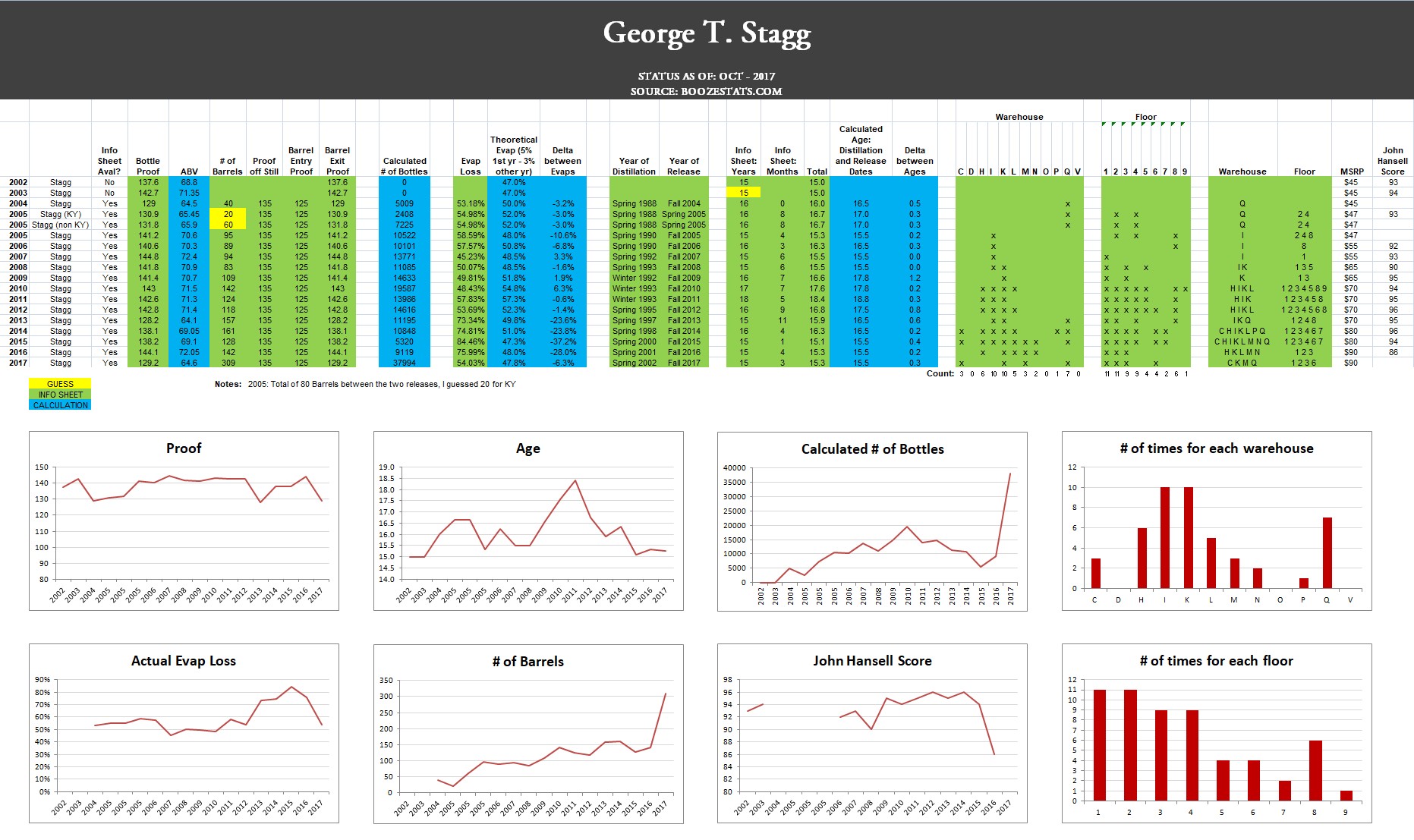
Some things I see:
- Warehouse choice is all over the place as the # of barrels has increased, with the clear “phases.” (see below) Since 2005, I and K appear to be a favorite.
- The floor choice tends to be towards the lower floors which makes sense for this well aged release.
- Age is pretty consistent except for the older 2010 and 2011 releases
- Evap loss has gone up recently which makes sense since they are starting to pull a little more from higher floors
“Phases”
- 2002-2005: These were probably all “Q’ warehouse barrels pulled from floor 2 and 4, with similar evap. (I say probably because we don’t know the details for the 2002 and 2003 releases)
- 2005-2009: This is the “I” warehouse phase with “K” coming in the blend at the end
- 2010-2013: Bottle count starts to ramp up and warehouse choice increases. They start to pull from higher floors as well and as a result the evap goes up. John Hansell really liked these releases.
- 2014-2016: They are pulling from almost all warehouses and all floors at this point. Evap is high on these releases. It is hard to say which warehouses are contributing to this high evap
- 2017+: We are in new territory here as the barrel count has gone way up. They also significantly changed up the warehouses as well compared to the last few years.
Notes for 2017:
- Holy cow at the barrel increase!
- And because the evap loss was relatively low, the bottle count is THROUGH THE ROOF! Not sure the logic behind this one
Overall: This is always a pretty great release, but that being said, you can see different “phases” this has gone through. I’m not sure if this will be a new thing, but the 2017 bottling will for sure be unique considering the bottle count!
 Booze Stats